


Kabir Suman: The Revolutionary Voice of Modern Bengali Music
Kabir Suman (born 16 March 1950, birth name Suman Chattopadhyay) is one of the most influential figures in the history of modern Bengali music. More than a singer, he is a songwriter, composer, arranger, author, and public intellectual whose work transformed the landscape of Bengali contemporary music.
In the early 1990s, Suman introduced a fresh musical language that brought deeply personal emotions, urban life, love, loneliness, social inequality, and political awareness into the mainstream. His lyrics were honest and conversational, while his melodies were simple yet profoundly expressive.
Using little more than a guitar, keyboard, and minimal instrumentation, he demonstrated that powerful music does not require elaborate orchestration. His songs opened a new chapter in Bengali music by placing authenticity and storytelling at the heart of the listening experience.
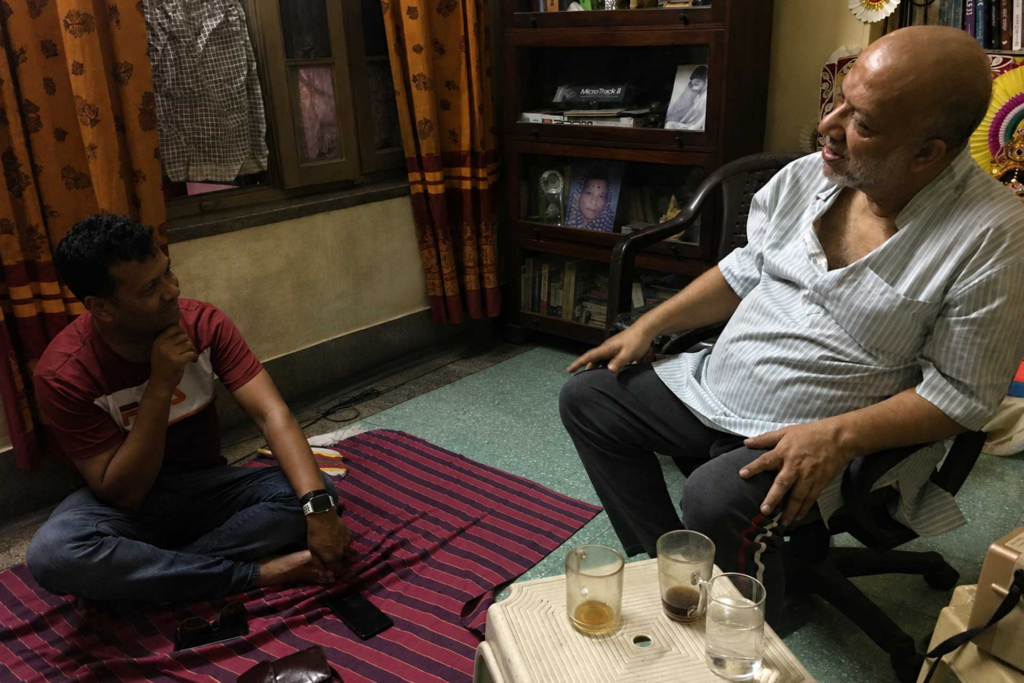
I had the privilege of spending time with Kabir Suman during a long conversation at his residence in Kolkata. He was remarkably open, thoughtful, and generous in sharing his ideas. Our discussions ranged from music and literature to society, politics, and life itself. Those rare moments remain among my most treasured memories and offered me a deeper appreciation of the artist behind the songs.
Why Is Kabir Suman So Celebrated?
- A pioneering figure in the Bengali singer-songwriter tradition.
- He writes, composes, and performs most of his own songs.
- His work explores love, life, society, politics, and humanity with exceptional honesty and originality.
- He creatively blended Western folk and contemporary musical influences with Bengali lyrical traditions.
- His music has inspired generations of singers, songwriters, composers, and music lovers across Bengal and beyond.
Some of Kabir Suman’s Most Iconic Songs
- Tomake Chai
- Jatismar
- Petkati Chandiyal
- Hal Chhero Na Bondhu
- Mon Kharap Kora Bikel
- Amader Jonyo
- Bose Anko
- Prothom Shobkichu
- Chena Dukkho Chena Sukh
- Ganwala
- How’s That
- Juya
- Shararat Joleche Nibir
- Shufiya Kamal
- Helicopter
Among Kabir Suman’s vast repertoire, these songs are regarded as his classics:
- Tomake Chai – His signature song and one of the most iconic Bengali songs of the 1990s.
- Jatismar
- Petkati Chandiyal
- Haal Chherona Bondhu
- Mon Kharap Kora Bikel
- Amader Jonyo
- Bose Aanko
- Pratham Sob Kichhu
- Chena Dukkha Chena Sukh
- Gaanwala
Great songs are not merely heard—they become part of our lives, our memories, and our emotions. Kabir Suman’s music is one of those rare treasures.
“Tomake Chai”: A Landmark in Bengali Music
“Tomake Chai” is far more than a song—it is a cultural milestone in the history of Bengali music. Released in 1992 as the title track of the landmark album of the same name, it redefined modern Bengali songwriting and inspired a new generation of independent artists.
The album’s songs reflected everyday life with extraordinary sincerity and emotional depth. In Tomake Chai, love is portrayed not merely as romance but as a complex blend of longing, intimacy, solitude, and the rhythms of urban existence. Its understated arrangement, heartfelt vocals, and poetic simplicity have allowed the song to remain timeless.
Many music critics regard the Tomake Chai album as the beginning of a new era in Bengali music—one in which the artist’s personal voice, creative freedom, and authentic storytelling became central to musical expression.
The Legacy of Kabir Suman
Kabir Suman transformed the language, themes, and presentation of Bengali music. He proved that a single voice, a guitar, and honest words could create music of extraordinary depth and lasting impact.
Even today, his songs continue to inspire listeners to reflect, question, and feel. His work has left an enduring mark on Bengali culture and remains an essential part of its musical heritage.

