


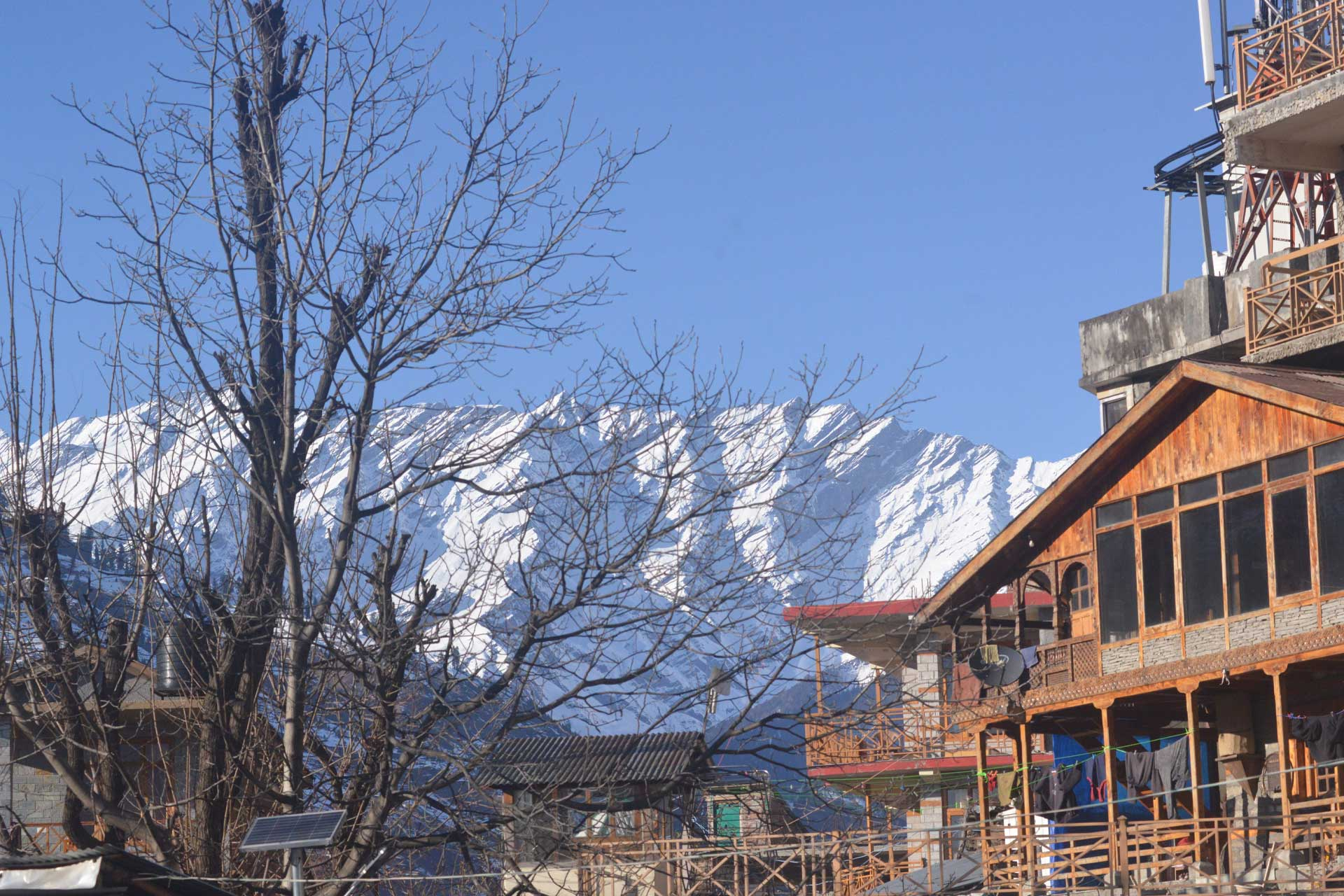
Framed by the jagged, snow-dusted ridges of the Pir Panjal range, Old Manali presents a striking visual contrast where the natural landscape meets human ingenuity. While the lower valley has succumbed to modern concrete construction, the higher slopes still showcase a deep connection to indigenous vernacular design.
A glance across the skyline reveals how traditional architectural elements adapt to a rugged mountain environment, offering a masterclass in building with the landscape rather than against it.

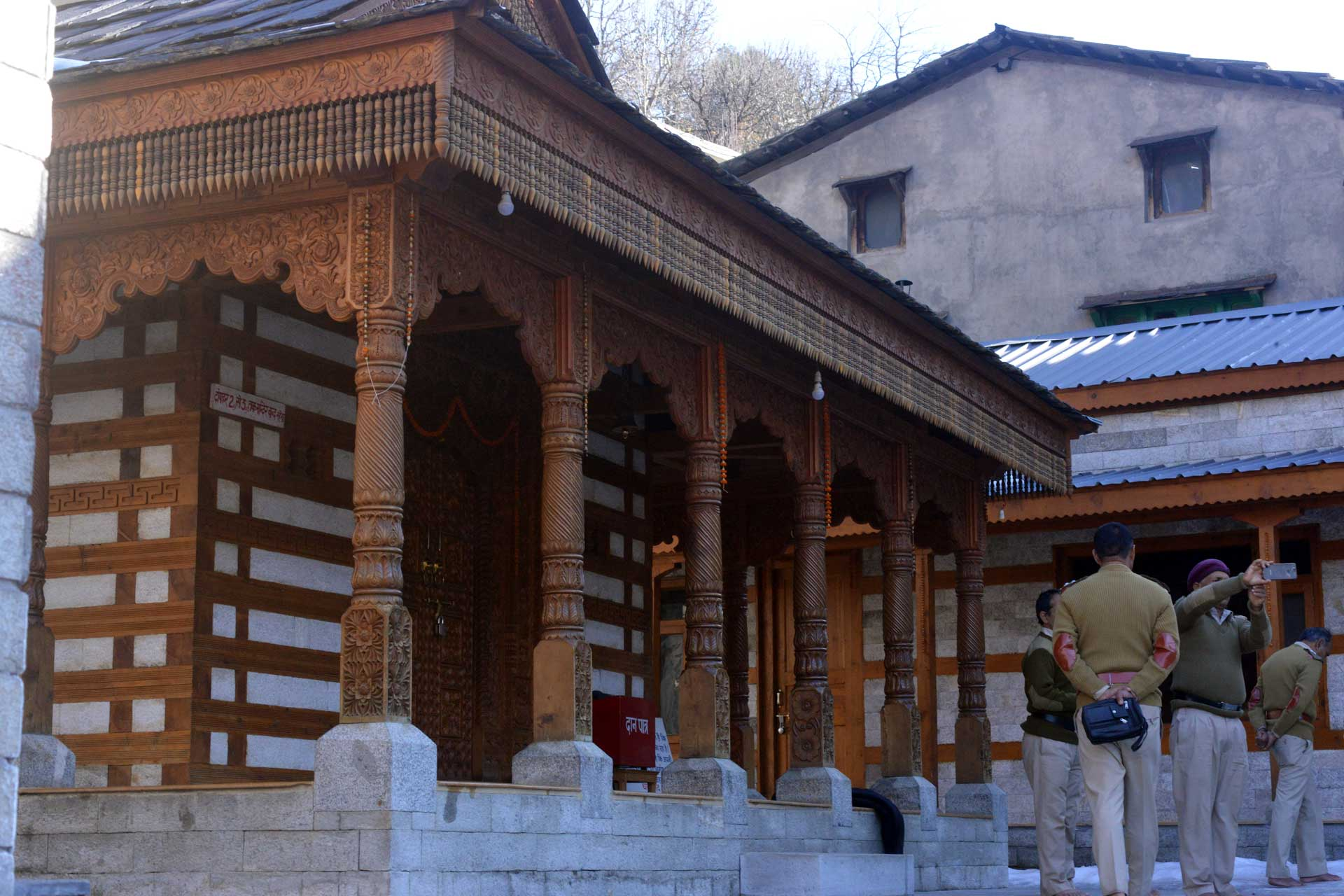
Kath-Kuni architecture is more than just a beautiful relic of the past; it is an early blueprint for circular and sustainable design. Built entirely from local, natural materials, these structures have a remarkably low carbon footprint and are perfectly adapted to the microclimate of the Kullu Valley.
Framed by the jagged, snow-dusted ridges of the Pir Panjal range, Old Manali presents a striking visual contrast where the natural landscape meets human ingenuity. While the lower valley has succumbed to modern concrete construction, the higher slopes still showcase a deep connection to indigenous vernacular design.
A glance across the skyline reveals how traditional architectural elements adapt to a rugged mountain environment, offering a masterclass in building with the landscape rather than against it.
Materials Sourced from the Soil
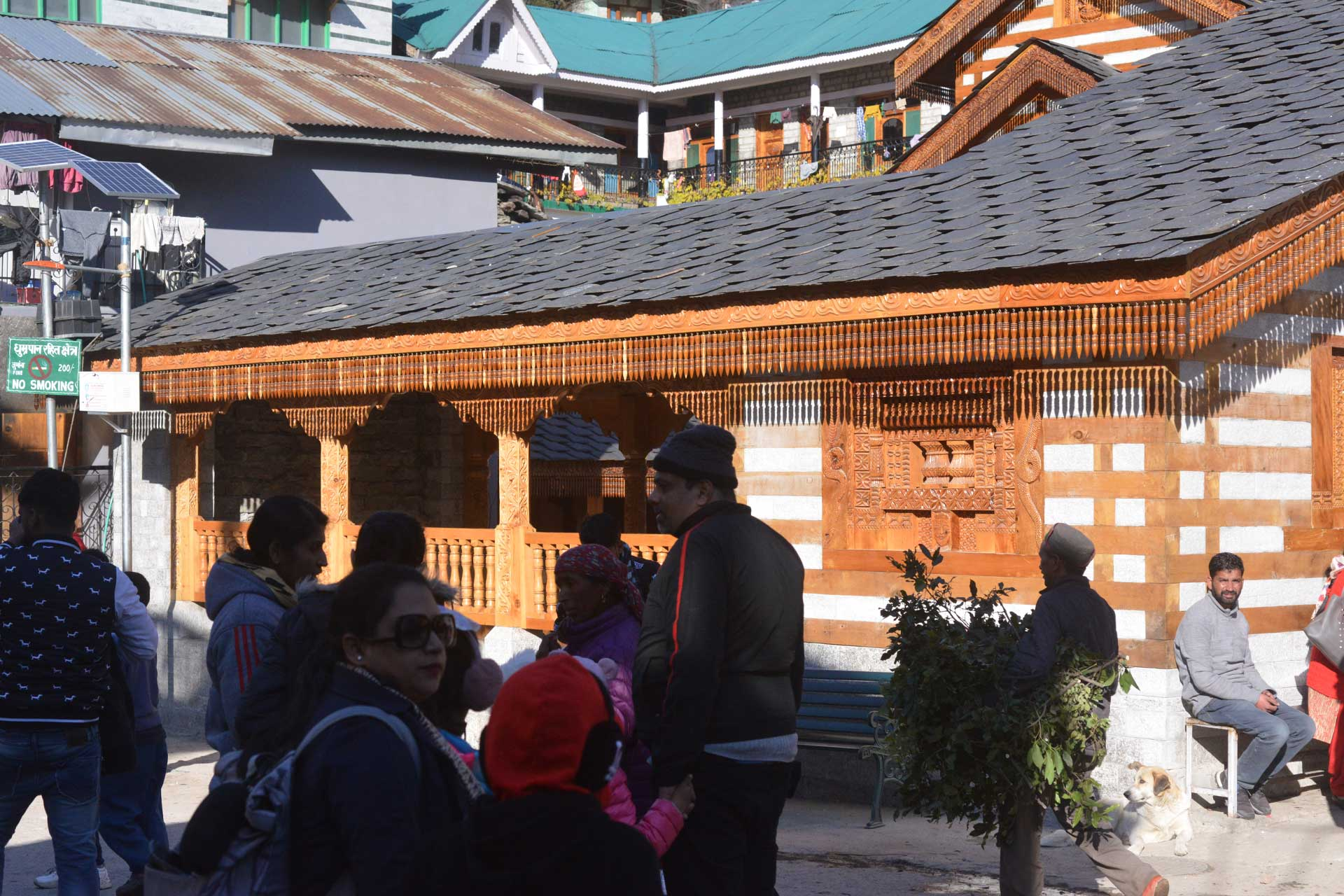
What makes the traditional architecture of the Kullu Valley stand out is its organic material palette. The extensive use of local timber—predominantly resilient Deodar cedar—creates structures that naturally age into a rich, amber-brown patina that mirrors the surrounding forests. Combined with low-slung roofs designed to shed heavy snow easily, these buildings are visually integrated into the hillside.
Even as modern elements like solar panels, metallic roofing, and communication towers begin to slice through the historic skyline, the underlying layout of these wooden homes keeps the spirit of the mountain village alive. They stand as a testament to an era when architecture was a direct conversation between the builder, the forest, and the horizon.

